
George Frideric Handel
JULIUS CAESAR IN EGYPT
Book & Buy Tickets Odštampaj
Baroque opera in three acts
PREMIERE PERFORMANCE
Monday, 26th January 2026 at 19:30
Large Stage of Madlenianum
Co-production of the New Belgrade Opera and the Opera & Theatre Madlenianum
One of the most significant works of Baroque opera, Giulio Cesare in Egitto, represents the pinnacle of Handel's operatic creativity and one of the most performed works of the eighteenth-century operatic repertoire. From its London premiere in 1724 to the present day, this opera never ceases to fascinate audiences with its powerful drama, virtuosic vocal passages, and exceptionally complex psychological portraits of its characters.
The plot of the opera is set in Egypt, during the time of the historic meeting between the Roman general Julius Caesar and the Egyptian queen Cleopatra. Political intrigues, power struggles, betrayal and revenge form the framework in which a powerful love story unfolds, while Handel, through his music, precisely depicts the inner conflicts, ambitions, and emotional crises of his heroes. The characters of Caesar, Cleopatra, Cornelia, Sextus and Ptolemy are among the most complex characters in Baroque opera and provide exceptional opportunities for outstanding vocal and theatrical interpretation.
With this production of Giulio Cesare in Egitto, the longstanding collaboration between the Opera & Theatre Madlenianum and the New Belgrade Opera, which began in 2014, continues with the goal of systematically presenting Baroque opera repertoire on the domestic and regional stage. Within this collaboration, productions of Monteverdi's The Coronation of Poppea, Handel's Orlando as well as the production of Monteverdi's Orfeo have been realized. The production of Orfeo, as a special artistic breakthrough on the regional music-theatre scene, was awarded the UMUS Annual Prize for the best musical achievement in 2017.
The premiere of the opera Giulio Cesare in Egitto at Madlenianum represents the first staged performance of this work in Serbia on period instruments and is being held on the Madlenianum Day, traditionally celebrated on 26th January. This event is one of the central operatic moments of the season and a confirmation of the Madlenianum's enduring dedication to the pinnacle achievements of the world's musical heritage. The production was also developed through work at the Belgrade Baroque Academy, within which the Early Music Studio works intensively with young, talented soloists.
Music: George Frideric Handel (1685–1759)
Libretto: Nicola Francesco Haym
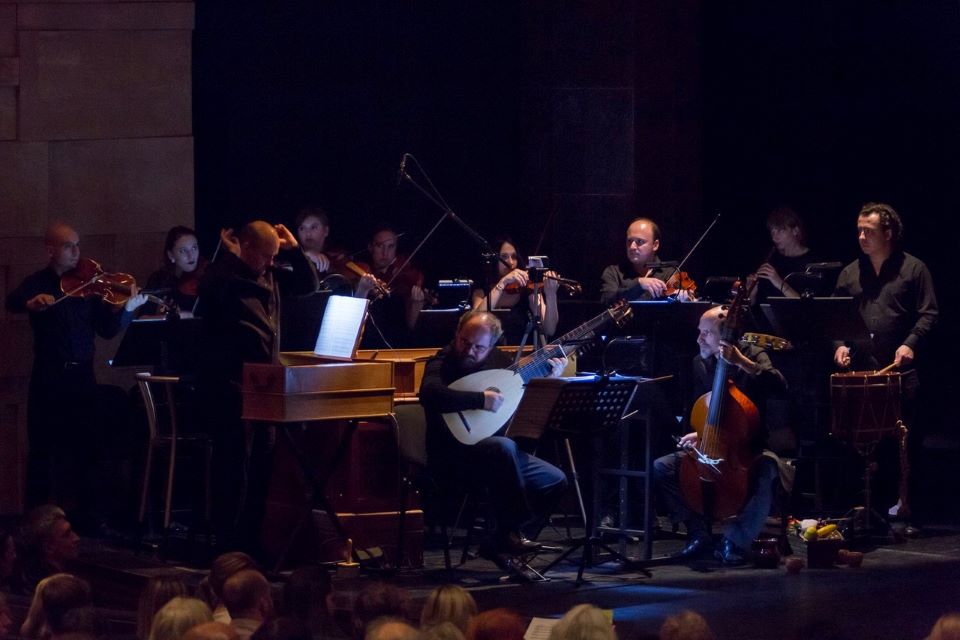
Orchestra: "New Trinity Baroque" (UK) on period instruments
Choir: Russian Chamber Choir "Nasleđe" (Heritage) (Novi Sad)
Dance Ensemble: Institute for Artistic Dance (Belgrade)
Conductor and Musical Director: Predrag Gosta (Serbia / UK)
Stage Director: Ilija Roitman (USA / Israel)
Set and Costume Design: Tijana Trailovic
Concertmaster: Simone Pirri (Italy / UK)
Répétiteur: Dusan Toroman
Choir Preparation: Timur Musaev (Russia)
Choreographer: Anja Stojankic
CHARACTERS:
Julius Caesar (first Roman emperor) – Sandro Rossi, countertenor (Italy / Belgium)
Cleopatra (Queen of Egypt) – Radoslava Vorgic, soprano
Sextus Pompey (son of Pompey and Cornelia) – Silvija Radjen Kumar, soprano (Croatia)
Ptolemy (King of Egypt and Cleopatra’s brother) – Julia Portela Piñón, mezzo‑soprano (Spain)
Cornelia (wife of Pompey) – Federica Moi, alto (Italy)
Achillas (Ptolemy’s general and advisor) – Sreten Manojlovic, bass‑baritone
RADNJA OPERE
Act One — Caesar (Cesare) enters Alexandria with his army. They are met by Cornelia and Sextus, the wife and son of Pompey, who have come to ask for peace. Caesar agrees to embrace his enemy, but at that moment, Achillas, Ptolemy's general, arrives with greetings and a gift from his king: the severed head of Pompey. Horrified, Caesar sends Achillas back with an angry message for Ptolemy and a threat that he will meet the king in his palace before nightfall. Cornelia mourns her loss, and Sextus vows to avenge his dead father.
In the palace in Alexandria, Cleopatra plans to seize exclusive power over the throne. Upon learning of Ptolemy's betrayal of Pompey, she decides to visit Caesar's camp and win his favour and assistance. She and Ptolemy quarrel before she sneaks away. Achillas informs Ptolemy of Caesar's furious reception of the gift and offers to carry out his assassination if Ptolemy grants him Cornelia as a reward. Ptolemy fears the growing power of Rome under Caesar's leadership and agrees.
In his camp, Caesar presides over the funeral rites for Pompey. Cleopatra appears before him disguised as Lydia, a palace handmaiden, of noble birth but deprived of her rights by Ptolemy. Enchanted, Caesar promises to help her. Cornelia pays her last respects to her dead husband, while Sextus plots his revenge. Cleopatra, still in disguise, steps forward and promises the support of the Queen of Egypt.
Caesar meets with Ptolemy in a cold, diplomatic audience. Nevertheless, he cautiously accepts the king's invitation to be his guest. Cornelia and Sextus confront Ptolemy. He is astonished by Cornelia's beauty, but when Sextus challenges him to a duel, Ptolemy orders their imprisonment. Achillas offers Cornelia her freedom in exchange for her affection, but she angrily refuses him. She and Sextus sadly bid each other farewell before the guards separate them.
Act Two — Cleopatra has organized a festivity in the palace to further intrigue Caesar. He arrives and is enchanted by her singing, convinced that "Lydia" is deeply attracted to him and will receive him in her chamber later that night.
Cornelia, now a captive of Ptolemy, laments her fate. She again refuses Achillas, only to encounter Ptolemy's unwanted pursuit. She resolves to take her own life, but Sextus saves her. Sextus manages to escape from prison and learns that Ptolemy has ordered Cornelia to become one of his concubines. He conceives a plan to slip up to the king unseen, at the moment when he is most vulnerable.
Cleopatra awaits Caesar in her chamber, pretending to be asleep when he enters. Their amorous encounter is interrupted by news that Caesar is in danger. Cleopatra reveals her true identity to Caesar and begs him to flee to safety. Caesar refuses and leaves to confront his enemy. Cleopatra prays to the gods to protect him and to preserve the love she now truly feels for him.
Act Three — Sextus sneaks in and attempts to use Ptolemy's own weapon to kill him, but Achillas disarms him. It is announced that Caesar has reportedly drowned in the harbour during the previous night, while Cleopatra has fled to the Roman camp and rallied an army to march on the palace. Ptolemy prepares to lead his troops but denies Achillas the promised reward for Caesar's death: Cornelia will be his own reward. Furious, Achillas decides to switch loyalty and join Cleopatra's side.
Ptolemy's army achieves victory in the battle and Cleopatra is captured. Her brother promises terrible vengeance, but she faces death bravely. Meanwhile, Caesar is not dead: the sea has washed him ashore. Far from his army, he prays to the wind for aid. Caesar comes upon the wounded Achillas, who is dying on the beach, and from him learns the truth of the events at the palace. Caesar goes to rally his forces for a final assault.
In prison, Cleopatra prepares to take her own life. Caesar bursts in with his troops and saves her. He sends her to the harbour to rally her army and goes to wage war against Ptolemy. Convinced of his victory, Ptolemy sees no obstacle in his pursuit of Cornelia, but Sextus finally seizes his opportunity and kills him. The battle is won and Caesar crowns Cleopatra as the sole Queen of Egypt. She proclaims her loyalty to the Roman Empire. The lovers sing and all hail the coming of peace.
Photographs signed by: New Trinity Baroque
Photos from the premiere:
https://operatheatremadlenianum.com/en/photos-performance-opera-julius-c...